COMFORT clinical study underway: Evaluating AI-supported decision-making in prostate and kidney cancer care
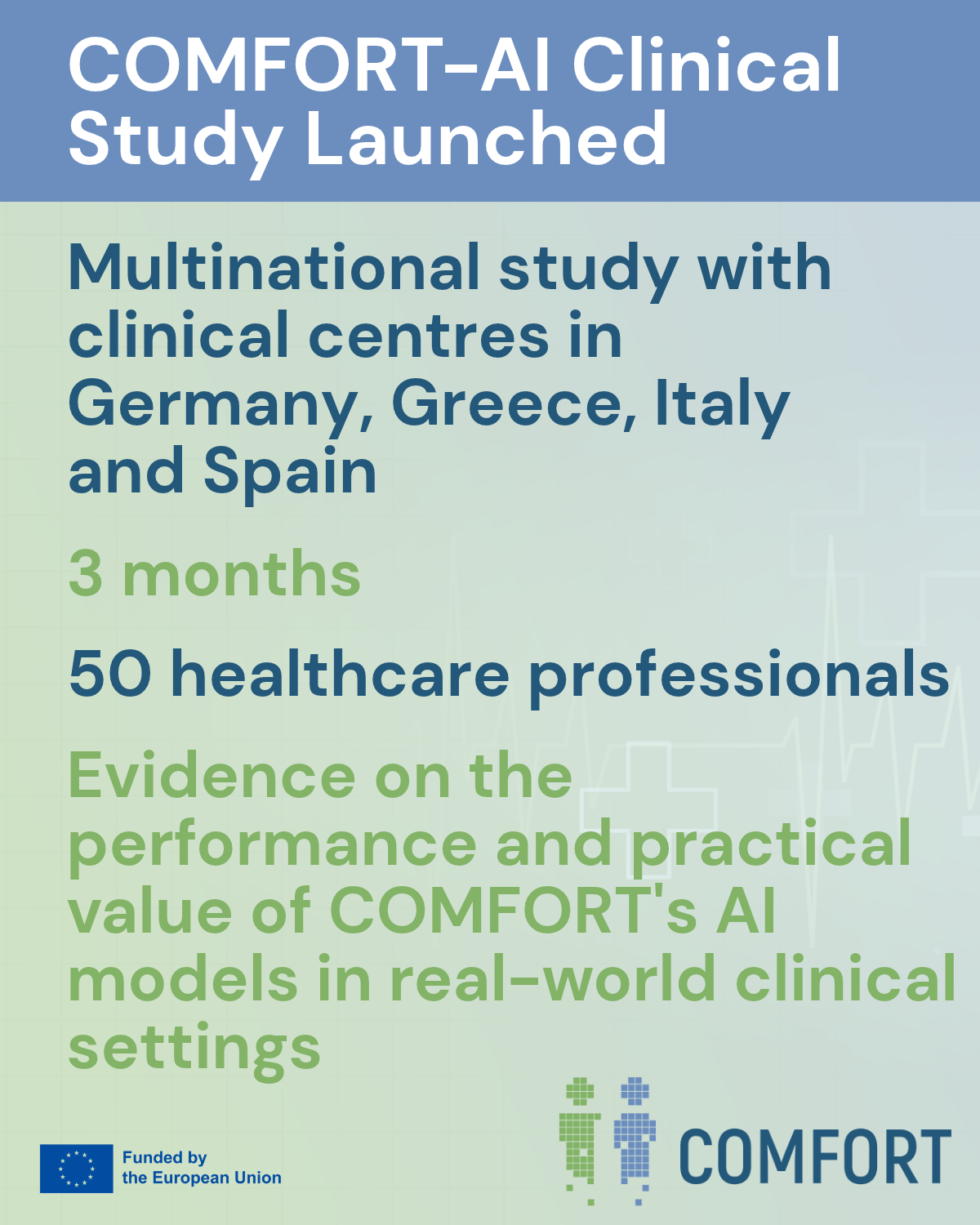
The EU-funded COMFORT project has reached an important milestone with the launch of its clinical study on 15 November 2026. Over the next three months, healthcare professionals across Europe will evaluate the COMFORT platform, exploring its usability, trustworthiness and potential to support clinical decision-making in prostate and kidney cancer care.
The study marks a significant step towards bringing COMFORT's AI-powered solutions closer to clinical practice. Developed to support the assessment and stratification of patients with prostate and kidney cancer, the platform combines artificial intelligence models with medical imaging and clinical information to provide healthcare professionals with additional insights for diagnosis and treatment planning.
The multinational study involves clinical centres in Germany, Greece, Italy and Spain, with the aim of engaging approximately 50 healthcare professionals specialising in urology and radiology. Participating clinicians will assess AI-generated outputs, including anatomical segmentations, tumour characterisation and risk predictions. By comparing clinical assessments with and without AI-generated information, researchers aim to better understand how the platform could support medical decision-making, improve diagnostic confidence and contribute to more efficient clinical workflows.
An important focus will also be placed on the usability, acceptability and trustworthiness of the platform. Through questionnaires and structured interviews, participating healthcare professionals will provide valuable feedback on its performance and potential integration into routine clinical practice.The observational study will run alongside standard clinical care, without influencing actual patient management or treatment decisions.
Towards trustworthy AI in clinical practice
The findings will provide important evidence on the performance and practical value of COMFORT's AI models in real-world clinical settings. They will also help identify opportunities for further improvement, contributing to the project's overarching goal of developing robust, trustworthy and clinically relevant AI solutions for more personalised prostate and kidney cancer care.